
Home practice
Is hitting a tennis ball against a wall good practice for kids?
Yes. A wall sends the ball back every time, so a child can keep hitting without needing a partner, and the ITF suggests hitting against a wall as tennis homework for young players. For children at the red and orange ball stages, use a slow red or foam ball, start close to the wall, let the ball bounce, and count how many hits in a row they can make.
Why the wall works
A wall never gets tired and never sends a bad feed. The ITF's guide for coaches of players aged 10 and under suggests giving children tennis homework, such as hitting with friends or against a wall, so they play more outside lessons. The LTA points out that a wall lets you choose exactly what to work on, such as only forehands, only backhands or volleys.
It also turns practice into a game. A Tennis Australia club coach suggests children count how many times they can keep the ball going without a mistake, while focusing on a low to high swing.
What you need
- A plain wall with no windows, and flat ground in front of it. A garage wall or a fence board works well.
- A slow ball. Red balls travel about 75% slower than a standard yellow ball, which gives young players time to get ready. Indoors or near a house, a foam ball is quieter and safer.
- A racket that fits. See what size tennis racket does my child need?
- Something to aim at. A square of chalk or masking tape on the wall, about a metre off the ground.
Six wall games to start with
Work through these in order. Move on when your child can do the current one comfortably, and go back a step if the ball keeps getting away.
- Throw and catch. No racket yet. Throw the ball at the wall, let it bounce once, and catch it. This builds the timing every later game needs.
- Drop, hit, catch. Drop the ball, hit it gently at the wall after one bounce, then catch it on the way back.
- Count the rally. Keep hitting after one bounce and count the hits in a row. Write down the best score and try to beat it next time.
- Hit the square. Aim every hit at the tape square. Count how many land inside.
- One side only. A rally of only forehands, then only backhands. This is the LTA's tip for working on a weaker side.
- Wall volleys (orange ball players). Stand closer and hit the ball before it bounces. A volley is the shortest swing in tennis: the same Tennis Australia coach compares it to a high five with the racket.
Red ball and orange ball: what changes
- Red ball: use a red ball, or a foam ball indoors. Stand close and let the ball bounce once or twice. Games 1 to 4.
- Orange ball: use an orange ball. Step further back and let it bounce once. All six games, including volleys.
Not sure which stage your child is at? See red, orange and green ball tennis explained.
Where should they stand?
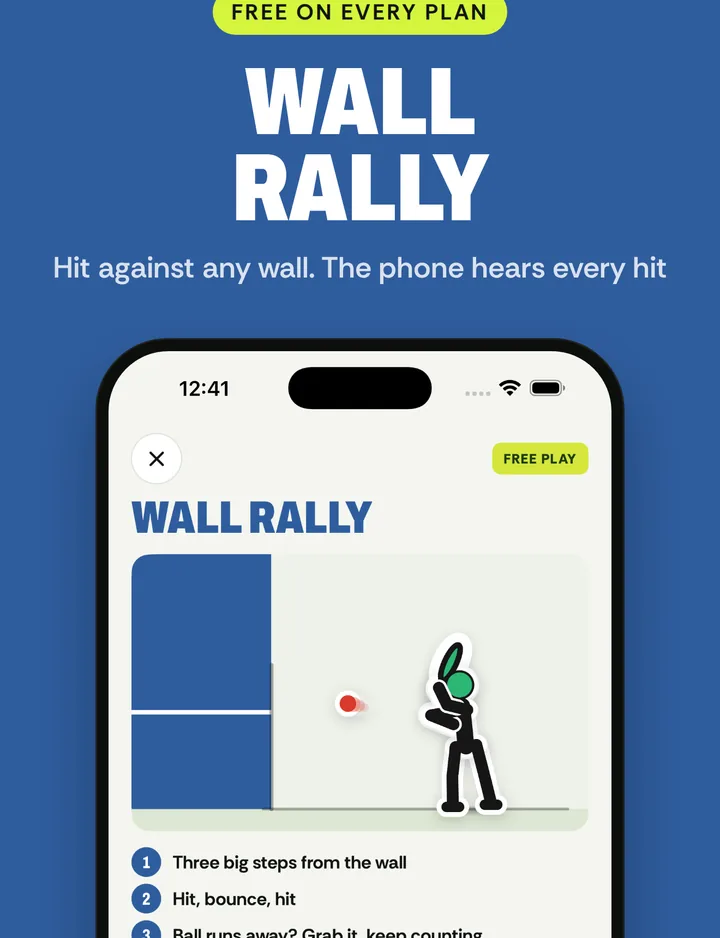
Start about three big steps from the wall, close enough that the ball comes back after one bounce without your child having to run for it. As the rallies get longer, take a step back. If the ball keeps flying past them, they are too close or hitting too hard.
How long to practise
Short and often works best. Five to ten minutes on most days is plenty for a young player, and it is better to stop while it is still fun. See how much should a young child practise tennis? for the guidance behind this.
Staying safe
- Clear the space around the wall, and keep younger brothers and sisters well back from the swing.
- Use a foam ball indoors, and keep away from windows, cars and anything breakable.
- Check the ground is dry and even before playing.
More guides
Sources
- ITF Tennis10s: 10 and under tennis manual (slower balls, and tennis homework against a wall)
- LTA: how to train and practise tennis skills by yourself
- LTA Youth: tennis at home
- Medibank: tennis for kids, with tips from a Tennis Australia club professional
This guide is general information for parents, not medical advice. Check with your child's coach or doctor about their own situation.